
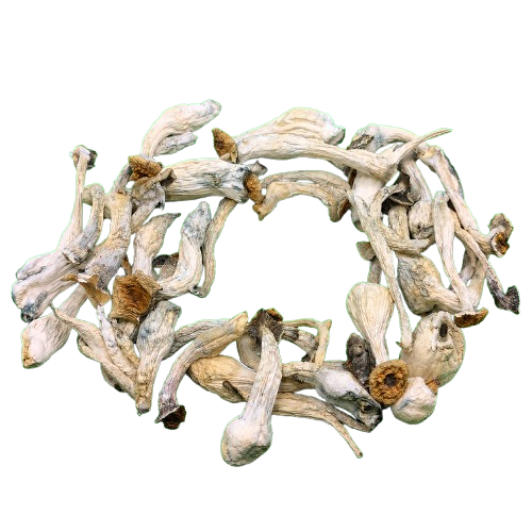
Golden Teacher Mushrooms: History, Characteristics and Facts
Introduction
Golden Teacher mushrooms are among the best-known varieties associated with psychedelic mushrooms. Recognized by their golden-brown caps, they are commonly discussed in mycology, psychedelic history and scientific research.
These mushrooms are associated with Psilocybe cubensis, a species containing naturally occurring compounds called psilocybin and psilocin.
In this article, we explore Golden Teacher mushrooms, including their history, physical characteristics, scientific classification, chemical composition and potential health risks.
1. What Are Golden Teacher Mushrooms?
Golden Teacher is a commonly used variety name associated with Psilocybe cubensis.
The name refers to their characteristic golden appearance and their popularity in psychedelic culture. They are not considered a separate scientifically recognized mushroom species.
Psilocybe cubensis belongs to the fungal kingdom and is known for containing naturally occurring psychedelic compounds.
2. History of Golden Teacher Mushrooms
Golden Teacher mushrooms became widely recognized through psychedelic culture and discussions about mushroom varieties.
Although their exact historical origin is not clearly documented, interest in psychedelic mushrooms increased significantly during the twentieth century.
Researchers subsequently began investigating psilocybin and its interactions with the human brain.
Today, Golden Teacher mushrooms remain a popular subject in discussions about fungal science, psychedelic history and modern research.
3. Physical Characteristics of Golden Teacher Mushrooms
Golden Teacher mushrooms are commonly associated with several physical characteristics:
- Golden-brown caps: Their caps are often described as golden or caramel-colored.
- Distinctive shape: Their caps may appear rounded or bell-shaped.
- Pale stems: Their stems are generally described as whitish or light-colored.
- Dark spores: The species Psilocybe cubensis is associated with dark purplish-brown spores.
These characteristics are general descriptions, not reliable proof of mushroom identity. Some poisonous mushrooms can look similar, making professional identification important.
4. Scientific Classification
Golden Teacher is associated with the species Psilocybe cubensis.
Its basic scientific classification includes:
- Kingdom: Fungi
- Phylum: Basidiomycota
- Class: Agaricomycetes
- Order: Agaricales
- Genus: Psilocybe
- Species: Psilocybe cubensis
Understanding fungal classification helps explain the biological relationships between different mushroom species.
5. What Compounds Are Found in Golden Teacher Mushrooms?
Psilocybe cubensis contains naturally occurring compounds, particularly psilocybin and psilocin.
Psilocybin: A naturally occurring psychoactive compound that the body converts into psilocin.
Psilocin: The compound primarily responsible for the psychedelic effects associated with psilocybin-containing mushrooms. It interacts with serotonin receptors in the brain.
Chemical concentrations can vary, so the Golden Teacher name does not guarantee a consistent chemical composition.
6. Golden Teacher Mushrooms and Scientific Research
Psilocybin has attracted growing scientific interest because of its effects on brain activity, perception and emotional processing.
Researchers have investigated its potential therapeutic applications, particularly in studies involving depression and other mental health conditions.
However, most clinical studies use standardized psilocybin preparations under professional supervision rather than informal mushroom varieties.
Research is ongoing, and these findings should not be interpreted as proof that Golden Teacher mushrooms are an approved medical treatment.
7. Potential Risks and Health Considerations
Despite their natural origin, psychedelic mushrooms can carry significant health risks.
Possible adverse effects include:
- Anxiety and panic.
- Confusion and disorientation.
- Nausea and physical discomfort.
- Altered perception.
- Increased heart rate and blood pressure.
- Accidental injuries caused by impaired judgment.
Mushroom misidentification is another serious concern because some poisonous species can cause severe illness or death.
Anyone experiencing suspected mushroom poisoning should seek urgent medical assistance.
8. Common Myths About Golden Teacher Mushrooms
Myth: Golden Teacher is a separate mushroom species.
Fact: It is generally considered a variety name associated with Psilocybe cubensis.
Myth: All Golden Teacher mushrooms have identical chemical properties.
Fact: Chemical composition can vary between individual specimens.
Myth: Naturally occurring mushrooms are always safe.
Fact: Natural substances can still cause serious health complications.
Myth: Every golden-colored mushroom is a Golden Teacher.
Fact: Color alone cannot establish mushroom identity.
Conclusion
Golden Teacher mushrooms are a widely recognized variety associated with Psilocybe cubensis. Their distinctive appearance, cultural history and connection to psilocybin research make them an interesting subject in modern mycology.
Understanding their scientific classification, chemical composition and potential health risks helps readers separate reliable information from popular myths.
Responsible education and continued scientific research remain essential to understanding psychedelic mushrooms.
Frequently Asked Questions
1. What are Golden Teacher mushrooms?
They are a commonly recognized variety name associated with Psilocybe cubensis, a mushroom species containing psilocybin and psilocin.
2. Are Golden Teacher mushrooms a separate species?
No. Golden Teacher is generally an informal variety name associated with Psilocybe cubensis.
3. Why are they called Golden Teacher?
The name is commonly associated with their golden-brown appearance and reputation in psychedelic culture.
4. What is psilocybin?
Psilocybin is a naturally occurring psychoactive compound found in certain mushroom species.
5. Are Golden Teacher mushrooms dangerous?
They can cause psychological distress, impaired judgment and other adverse effects. Misidentification can also result in serious poisoning.
6. Are Golden Teacher mushrooms legal?
Their legal status varies by country. Psilocybin and psilocin are internationally controlled substances, and local regulations should always be checked.
7. Are Golden Teacher mushrooms used in scientific research?
They are discussed in psychedelic research, although most clinical studies use standardized psilocybin preparations rather than specific informal mushroom varieties.